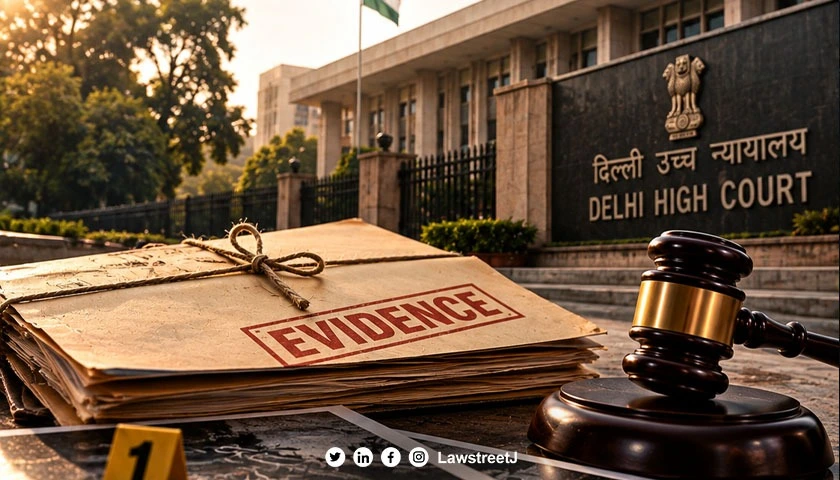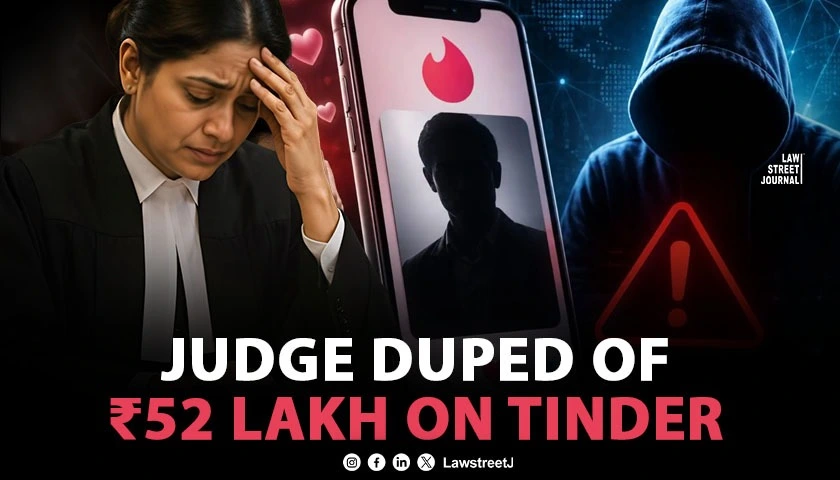
A Delhi Court has dismissed the bail application of a man accused of swindling a Haryana Judicial Officer of over ₹52 lakh through an alleged honeytrap scam initiated on the dating application Tinder.
Additional Sessions Judge Saurabh Partap Singh Laler of the Patiala House Courts, in an order dated June 9, 2026, observed that the accused had received substantial funds, withheld material electronic evidence, and failed to cooperate with the ongoing investigation.
The court highlighted the high risk of the accused attempting to influence or pressurise the judicial officer if released, especially given the sensitive and intimate nature of the material involved.
The alleged fraud began in November 2025 when the judicial officer matched with the accused, who had introduced himself as "Abhimanyu Vashishth". The accused claimed to be working in a "secret government department" and eventually established a romantic relationship with the officer. Over the following weeks, he reportedly persuaded her to transfer funds amounting to approximately ₹52.81 lakh under the guise of investment opportunities promising lucrative returns. When the promised profits failed to materialise, the officer realised she had been defrauded.
A significant twist in the proceedings emerged when it was revealed that the First Information Report (FIR) was not filed by the judicial officer herself. Instead, the complaint was lodged in the name of her domestic worker, Diksha Devi, who claimed she had been cheated through the online dating platform. Upon examining bank records, the court found that Diksha Devi had not initiated a single digital payment related to the fraud. Instead, the overwhelming majority of transactions originated directly from the bank accounts of the Haryana judicial officer.
The court expressed its concern over this indirect approach, noting that a judicial officer, who is entrusted with upholding truth and dispensing justice, had chosen to approach the criminal justice system obliquely through her maid’s name. While the court acknowledged the profound personal embarrassment and professional sensitivity that a victim of a romance scam might feel, it stressed that such discomfort cannot be permitted to compromise the integrity of a criminal investigation. The judge remarked that the path to justice requires candour and urged the victim to place the "unvarnished truth" on record.
In his defence, the accused, Deepak Vats, argued that the relationship was consensual and that the officer had initiated contact through a pseudonymous profile titled “Altruistic Joy”. He claimed that all financial transfers were voluntary and were intended for online gaming or betting accounts maintained in his name for entertainment purposes. However, the court observed that the pattern of financial transactions, which correlated precisely with WhatsApp communications, was consistent with the "hypothesis of a honey trap" and bore the hallmarks of a classic romance scam.
The court was also highly critical of the Investigating Officer (IO) for significant lapses in the probe. It noted that crucial electronic evidence, including Tinder chat history, complete WhatsApp exchanges, and call detail records, had not been secured. The judge suggested that the IO’s apparent reluctance to aggressively collect evidence from the victim side might reflect an "institutional hesitation" to press a judicial officer in a sensitive matter, an approach the court termed as "misplaced".
Furthermore, the accused was accused of playing "hide and seek" with investigators. The court noted that Vats had selectively produced one-sided WhatsApp messages showing only what the victim sent while withholding his own responses. He also refused to provide the password to his mobile phone, which has been in police custody since May 15, thereby obstructing forensic analysis. The court also found the explanation regarding a ₹5 lakh cash deposit allegedly made by the domestic worker to be "inherently implausible".
Concluding that the investigation remains incomplete and that the accused’s conduct amounted to active obstruction, the court denied bail. It directed the investigators to expedite the forensic analysis of the phone, verify alleged physical meetings, and obtain all necessary digital records to uncover the full truth of the matter.
Appearance: for the petitioners: Advocates Rahul Kumar and Pooja Chauhan.
For the respondents: Additional Public Prosecutor Santosh Kumar.
Case title: State v. Deepak Vats.



![Delhi High Court Sets Aside Arbitral Tribunal's Award Against NHAI in Highway Project Delay Case [Read Judgment]](/secure/uploads/2023/07/lj_9605_23374c2e-392c-4491-a2fe-f2f12fc5272f.jpg)
![Delhi Court Rejects Stay Request in Defamation Case Against Rajasthan CM Ashok Gehlot [Read Order]](/secure/uploads/2023/08/lj_5208_80de1ddc-d76a-4f7f-b180-408e3ae14fb4.jpg)